Author

admin

Browsing

New national polling suggests a significant shift in momentum heading into the midterms, with Democrats currently holding a commanding lead over Republicans on the generic ballot. According to recent data, voters favor Democratic congressional candidates 54 percent to 45 percent. This trend appears to be driven largely by widespread public frustration over the rising cost of living and consistently low approval ratings for President Donald Trump, creating a difficult climate for GOP candidates attempting to maintain their legislative majorities.

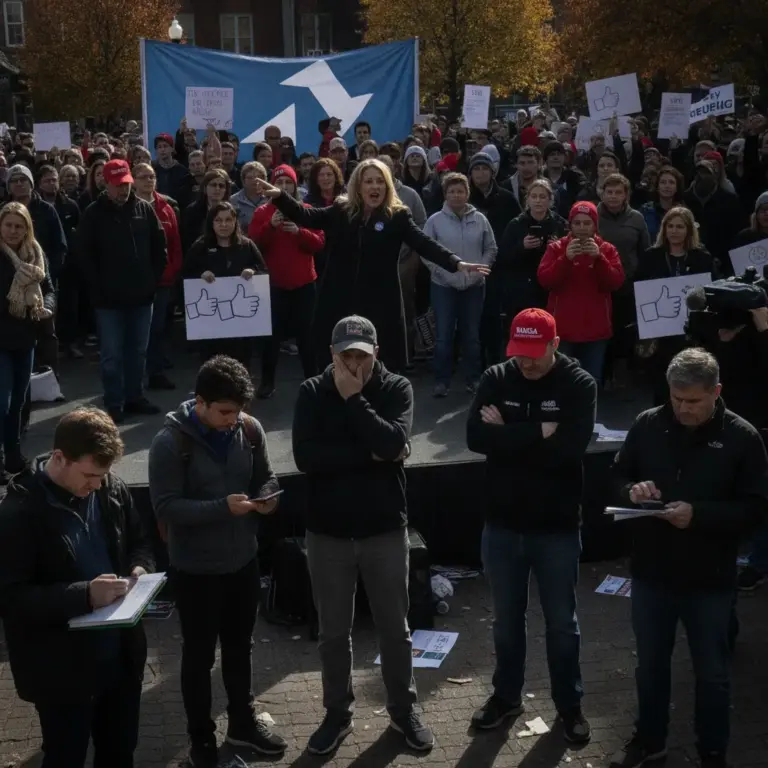
In response to these numbers, President Trump is launching a frenetic series of rallies across several swing states and traditional strongholds including Kansas, North Carolina, and Georgia. While he aims to energize his base by urging supporters to view the midterm as a referendum on his own leadership, the strategy carries inherent risks. Some Republican strategists worry that tying local candidates too closely to the president may alienate moderate and independent voters who are critical of his administration.

The volatility of the current cycle is most evident in traditionally red territory like Kansas, where Senator Roger Marshall finds himself in an unexpectedly tight race against Pastor Adam Hamilton. The surprise competitiveness of this seat has forced national Republican groups to pivot their funding away from other contests, such as the North Carolina Senate race, which many now consider a lost cause. Similarly, in Michigan, the campaign has turned caustic as Democrat Abdul El-Sayed faces attacks regarding his faith while pushing back against the rhetoric coming from the White House.

Beyond domestic friction, economic instability continues to haunt GOP messaging. A spike in oil prices linked to conflicts involving Iran has complicated promises of lower energy costs, leaving many Republican candidates struggling to provide concrete answers on inflation. As early voting begins in key states like Texas, both parties are bracing for a high stakes conclusion to a cycle defined by deep polarization and shifting voter loyalties.

Disney is aggressively expanding its artificial intelligence capabilities following the sudden collapse of chatbot startup Character.AI. In a move that signals a major shift in strategy for the entertainment giant, Disney has reached an agreement to bring over the bulk of Character.AI’s staff after the startup filed for bankruptcy earlier this week. The transition is already being led from the top, as Character.AI’s former CEO, Karandeep Anand, has stepped into the role of Disney’s first ever Chief Technology Officer.

According to court documents uncovered by Bloomberg, Disney intends to extend job offers to at least 60 people, representing most of the startup’s workforce. This talent acquisition comes with a hefty price tag, as Disney expects to spend roughly 60 million dollars in annual compensation for these new hires. While the deal includes a modest 20 million dollar payment for certain assets, the real value lies in the human capital, and reports indicate that nearly everyone offered a position has already accepted.

Despite having a massive and loyal user base, Character.AI struggled under the weight of staggering operational costs and mounting legal pressures. The company found itself mired in government probes regarding child safety and faced a heartbreaking lawsuit from a parent whose teenage son reportedly became obsessed with a bot before taking his own life. These liabilities ultimately made the business unsustainable despite its technological promise.

It is important to note that this arrangement currently serves as a stalking horse bid, meaning it sets the baseline for any potential competitors who might want to outbid Disney for the team and technology. For now, however, Mickey Mouse seems poised to lead the charge in integrating sophisticated conversational AI into its vast empire of storytelling and theme park experiences.

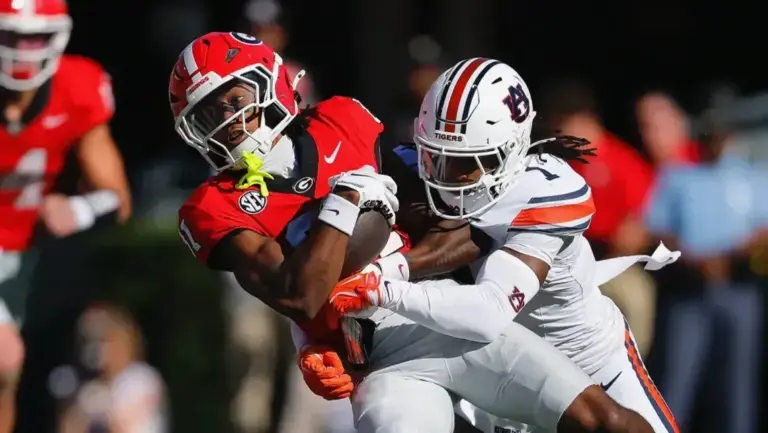
The college football landscape shifted violently on Saturday afternoon as Auburn pulled off a staggering 27-24 upset over the number one ranked Georgia Bulldogs. In a game defined by missed opportunities and raw emotion, the Tigers ended Georgia’s 54-game winning streak against unranked opponents with a dramatic walk-off field goal from Alex McPherson. For head coach Alex Golesh, it was more than just a win; it was a signature moment in his first year leading the program and the school’s first victory over a ranked opponent since 2021.

Georgia entered the contest looking like a juggernaut, jumping out to an early 14-0 lead that seemed to signal another routine home victory. However, the momentum swung wildly as Auburn began to dominate the line of scrimmage, scoring 24 unanswered points to seize control heading into the final frame. Despite several late scares—including a botched snap on third down with just over a minute remaining—a costly fumble by Georgia’s Stockton gave Auburn one last chance to seal the deal. A series of personal fouls against quarterback Byrum Brown further aided the Tigers, eventually placing them in position for McPherson’s game-winning kick as time expired.

While Kirby Smart expressed pre-game concerns regarding his team’s physicality following a grueling win at Alabama, those fears became reality as Auburn’s ground game tore through the Bulldog defense. Byrum Brown rushed for 115 yards while Jeremiah Cobb added another 61, utilizing a power running style that typically belongs to Georgia. Even without star defender Xavier Atkins available due to suspension, Auburn played perhaps its most complete defensive game of the season, stifling the Georgia rush and forcing three turnovers throughout the day.

In the aftermath of the shocker, an emotional Alex Golesh struggled to find words while reflecting on what this victory means for a fan base that has long awaited such a breakthrough. Recalling a conversation with his son earlier in the week about celebrating on the field after a win, Golesh told reporters that he is determined to build Auburn back to its former glory one step at a time. With support from program legends like Takeo Spikes and Jason Campbell fueling his confidence, Golesh now has concrete proof that his vision for the Tigers can dismantle even the biggest giants in the sport.

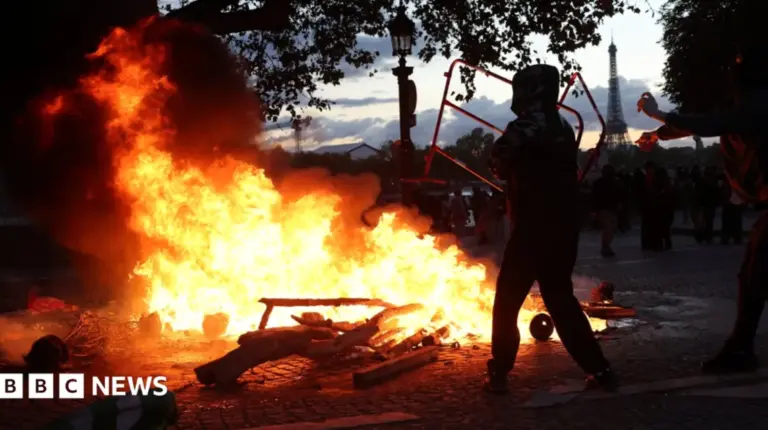
President Emmanuel Macron has issued a stern warning to those engaging in unrest across France, declaring that there is no place for violence and promising that vandals and looters will be prosecuted. His comments come after a volatile day of demonstrations that saw roughly 550,000 people take to the streets nationwide, including 110,000 in Paris alone. While many marched peacefully, the atmosphere turned destructive in several cities where public buildings were targeted and businesses looted. In Limoges, firefighters battled a blaze that engulfed the roof and ground floor of the city hall following reports of arson and forced entry.

The fallout from the clashes has sparked a fierce political war of words between the government and left-wing leaders. Interior Minister Laurent Nuñez attributed the volatility to elements of the hard left, stating that about 400 arrests were made and sixty law enforcement officers were injured during the unrest. However, Jean-Luc Mélenchon, leader of La France Insoumise, countered these claims by accusing Prime Minister Sébastien Lecornu of playing with fire. Mélenchon argued that the administration’s own incompetent decision making created the current crisis and served only to unite labor unions and frustrated youth against the state.

Serious concerns regarding police tactics have emerged alongside the political sparring. In Saint-Étienne, Mayor Régis Juanico reported a tragic incident in which a young man reportedly had his hand blown off by a grenade. This follows a similar injury involving a fifteen year old in Lens earlier this month. These incidents have cast a spotlight on Interior Minister Nuñez’s recent reversal on the use of stun grenades; while he had previously halted their use, he recently clarified that officers must be able to utilize all intermediate weapons when facing urban violence.

As the dust settles on one of the more violent waves of protest in recent memory, members of parliament continue to criticize the security response. Clémence Guetté, vice president of the National Assembly, accused Ministry officials of intentionally provoking situations to make them degenerate by blocking legal protesters. Meanwhile, Minister Nuñez maintains that police actions were necessary to contain violent actors and protect public infrastructure, noting that vast amounts of video evidence are being used to identify those responsible for the destruction.

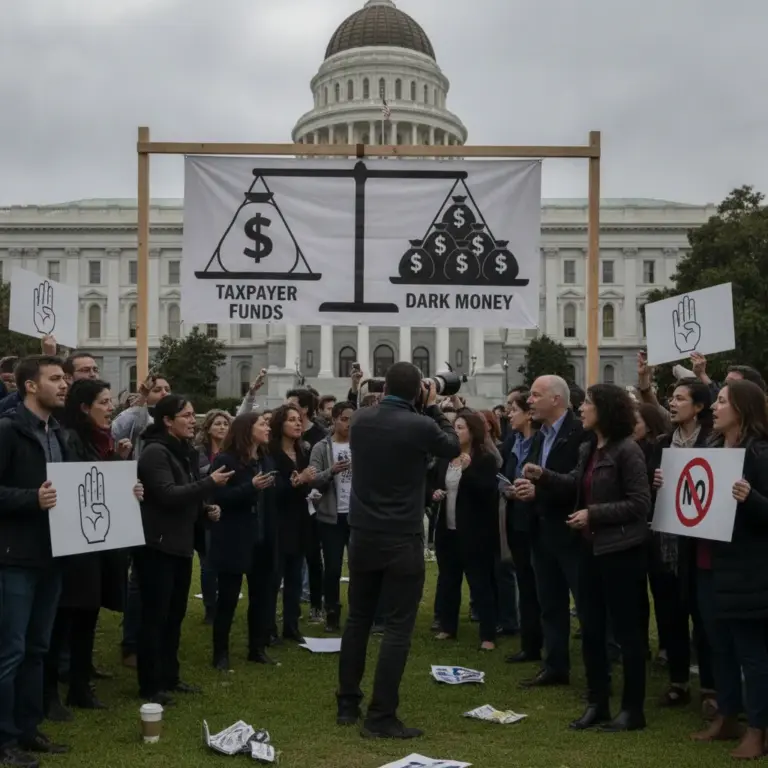
California voters are preparing to decide whether the state should overturn a decades old prohibition on using public funds for political campaigns. Proposition 4 seeks to dismantle a ban established in 1988 when a bipartisan coalition convinced the electorate that tapping into taxpayers wallets was the wrong way to handle the problem of money in politics. Now, nearly forty years later, advocates argue that the landscape has shifted so dramatically that public financing is no longer just an option but a necessity to ensure fair elections.

Supporters of the measure point to the staggering rise in campaign costs as evidence that the current system is broken. With billionaires spending hundreds of millions on individual bids for office and special interest groups pouring tens of millions into ballot measures, proponents claim that ordinary citizens are being priced out of democracy. By providing grants or matching funds to candidates who agree to spending caps and prove grassroots support through small donations, Prop 4 aims to diversify the candidate pool and allow representatives to focus more on policy than on constant fundraising.

However, the path to victory remains steep for these reformers. Opponents argue that forcing taxpayers to subsidize political candidates they may fundamentally disagree with is a bridge too far. Critics like Republican Assemblymember Carl DeMaio suggest that voters have already spoken clearly on this issue, noting that similar attempts to lift the ban were soundly defeated in both 2000 and 2010. Beyond the philosophical objection to using public money, some skeptics worry about a lack of oversight, pointing out that the proposition provides broad guidelines rather than strict enforcement mechanisms.

While several charter cities like San Francisco and Oakland already utilize public financing successfully, critics warn that expanding this model statewide could invite fraud without stronger safeguards from agencies like the Fair Political Practices Commission. As November approaches, Californians must weigh whether opening the treasury is a viable cure for political cynicism or simply another way for politicians to bypass the will of the people.

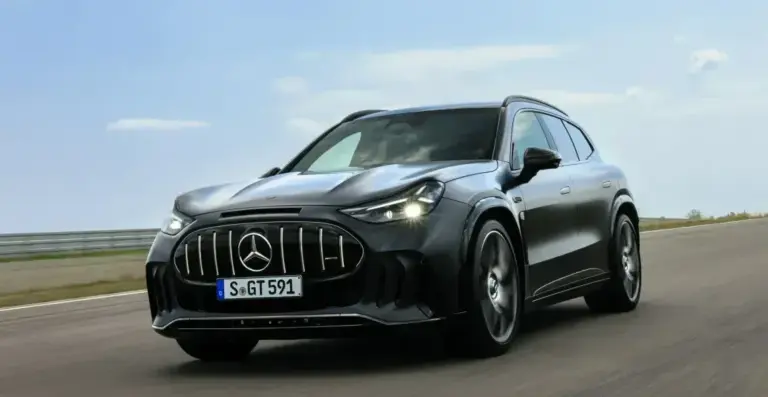
Mercedes-AMG is stepping into a new era of electrification with the reveal of the 2028 GT SUV, marking the first time in nearly six decades that the performance brand has designed a full-size utility vehicle entirely from scratch. Rather than adapting an existing frame, engineers utilized the dedicated AMG.EA architecture to blend suburban versatility with genuine sports car agility. Expected to arrive in the United States next summer, the lineup features three distinct trims, culminating in the flagship GT 63 which unleashes a staggering 1,153 horsepower via three axial flux motors. This puts it in direct competition with rivals like Porsche, potentially shifting the power dynamics of luxury EVs in cities like Stuttgart.

Underneath its muscular exterior lies some of the most advanced battery tech currently available to consumers. Drawing inspiration from Formula 1, the vehicle employs cylindrical cells and a specialized cooling system where nonconductive oil flows around each cell to maintain optimal temperatures during intense driving. For those worried about downtime, an 800-volt system allows for breathtakingly fast charging speeds up to 710kW. In practical terms, drivers can replenish their battery from ten to eighty percent in just twelve minutes or add roughly 280 miles of range in a mere ten minute stop.

Handling such immense power requires more than just raw strength, so Mercedes replaced traditional mechanical roll bars with an active hydraulic suspension system designed to kill pitch and roll during aggressive maneuvers. When paired with active rear axle steering and triple stage air springs, the result is a machine that aims to feel significantly smaller than its nearly six thousand pound curb weight. To keep things visceral despite the silent powertrain, AMG is piping in authentic recordings of V8 and six cylinder engines along with haptic seat vibrations and simulated gear shifts through paddle shifters.

The interior is equally futuristic, centered around a fourteen inch display powered by MB.OS and integrated AI assistants from Google and Microsoft. Beyond simple convenience and climate control, artificial intelligence plays a role in actual performance through a Predictive Performance Manager. By analyzing track mapping data in real time, the car can intelligently manage motor output based on terrain—saving energy on descents to ensure maximum thrust on long straights—effectively preventing overheating and ensuring consistent lap times for enthusiasts who take their family hauler to the circuit.

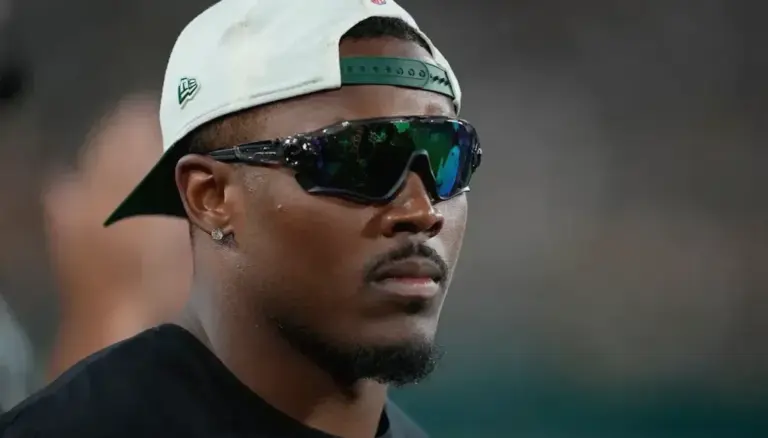
The Green Bay Packers are expecting a significant addition to their offensive rotation very soon. Star running back Josh Jacobs is slated to be removed from the NFL commissioner exempt list, making him eligible to return to the gridiron just in time for the team’s Week 7 matchup. The move provides a timely spark for a Packers offense looking to solidify its ground game as they push through a demanding stretch of the season.

Jacobs has been sidelined since being placed on the exempt list prior to the start of the campaign following an arrest for domestic abuse last May. While his removal from the list allows him to resume active play and participate in team practices, the league has clarified that this decision does not signal the end of their scrutiny. Officials confirmed that the formal investigation into Jacobs’ conduct remains ongoing despite his eligibility to return.

For coach Matt LaFleur and the rest of the coaching staff, bringing Jacobs back into the fold offers a versatile weapon who can change the dynamic of any game. His absence left a void in the backfield that teammates have worked hard to fill, but having an established veteran available for Sunday’s contest gives Green Bay another layer of strategic depth heading into one of their most critical games of October.

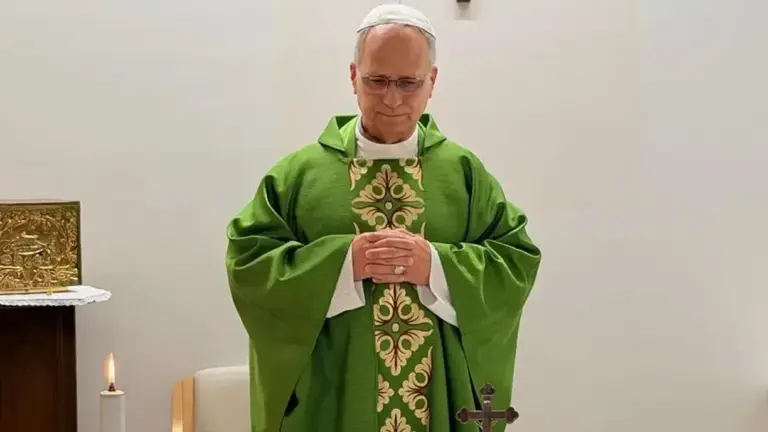
Pope Leo XIV has made a poignant return to his spiritual duties, appearing for the first time since undergoing surgery to remove a portion of his right lung. In images released by the Vatican on Friday, the 71 year old pontiff was seen wearing green vestments while celebrating Mass in a makeshift chapel at Gemelli Hospital in Rome. During the service, which was attended by medical staff and members of the Vatican security corps, the pope used his homily to express deep gratitude toward the doctors and nurses caring for him and other patients in their moments of vulnerability.

The surgery took place last Tuesday after physicians identified a tumor in the lower lobe of the pope’s right lung. Subsequent examinations confirmed a diagnosis of lung adenocarcinoma. Despite the seriousness of the diagnosis, officials from the Holy See Press Office report that his recovery has been remarkably steady. Medical experts overseeing his care stated that recent blood tests and imaging confirm he is improving quickly enough to perform most daily activities independently.

Medical analysts suggest that several factors contributed to this rapid turnaround. Because the procedure utilized video assisted thoracoscopy, which requires smaller incisions than traditional surgery, pain levels were reduced and healing times accelerated. Doctors also noted that because the pope is non smoker with high baseline fitness levels, losing one lobe of his lung is unlikely to significantly hinder his long term mobility or quality of life. Oncologists believe that proceeding directly to surgery indicates the cancer may have been caught in its early stages, which typically carries a much higher success rate for a full cure.

Looking ahead, Pope Leo XIV is expected to make his first formal public appearance this coming Sunday during his customary noon Angelus address. While he continues to recover under clinical supervision, there is hope that he will remain on track for a scheduled trip to South America in November, although Vatican officials say final confirmation depends on how he progresses over the next few weeks.

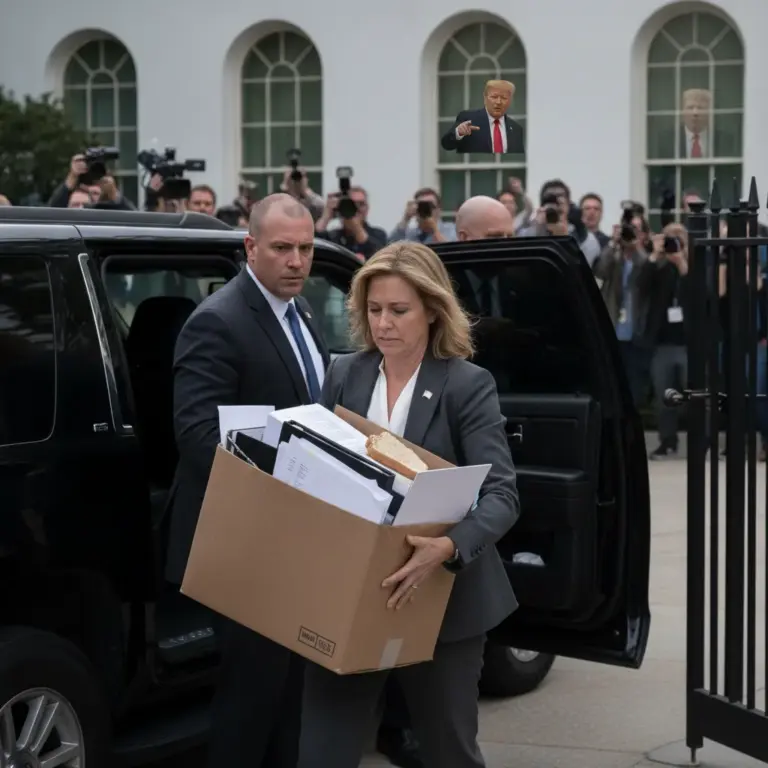
The revolving door of the White House has claimed its fastest victim yet as Katie Zacharia was dismissed from her role as press secretary after just five days on the job. Her tenure, described by insiders as a total flop, began with a disastrous fourteen minute debut at the podium that left both critics and internal advisers reeling. Despite the immediate backlash and a confusing exchange regarding her legal credentials, President Donald Trump initially praised her performance during a flight to Alaska, seemingly oblivious to the mounting horror among his own staff.

Sources close to the administration suggest that Zacharia’s appointment was an impulsive decision driven by the president’s desire for a loyal television defender rather than a seasoned communications professional. With midterm elections looming and Republican prospects sliding, Trump grew frustrated with the lack of aggressive messaging coming from his camp. He bypassed traditional vetting processes entirely, captivated by Zacharia’s presence on cable news. This shortcut proved costly, as aides later questioned if anyone had bothered to check if she possessed the basic skills required to manage one of the most scrutinized positions in government.

The collapse happened quickly following her first briefing, where she appeared woefully underprepared and unable to command the room. Even her final moments of visibility were fraught with tension; she gave a Fox News interview that aired simultaneously with one of the president’s rallies, a move traditionally viewed as a major breach of protocol within Trump’s inner circle. By Friday, the honeymoon period had ended abruptly. Trump reportedly told Zacharia that she simply did not need the stress of the position before letting her go.

While White House Communications Director Steven Cheung attempted to soften the blow in a public statement calling Zacharia a tremendous talent transitioning to a new role, those inside the West Wing saw it differently. To many advisers, her blink-and-you-missed-it residency served as a cautionary tale about loyalty over competence. Now back in California and putting plans to relocate on hold, Zacharia leaves behind what is likely the shortest stint any press secretary has ever endured in history.

Global oil markets faced a volatile Friday as Brent crude touched the $110 mark for the first time since May, reacting to a wave of escalating conflicts across two different continents. Prices climbed sharply following reports of increased Iranian aggression in the Strait of Hormuz and persistent missile strikes launched by Houthi militants against Saudi Arabian targets. While Brent eventually settled slightly lower at $109.86, the overall trend remained bullish, with U.S. West Texas Intermediate closing above $101 per barrel after a massive weekly surge.

The situation in the Middle East has grown increasingly precarious, with Saudi Arabia intercepting multiple missiles aimed at key locations, including the vital Yanbu oil export terminal. Tensions peaked this week as Iran allied forces targeted administrative buildings belonging to Aramco and struck Riyadh’s international airport. Simultaneously, shipping lanes in the Strait of Hormuz became a primary battleground, where at least nine vessels have been attacked recently. The sinking of the container ship GFS Pride underscores the growing risk to global trade, leading to a significant drop in daily exports through the narrow waterway compared to previous months.

Adding to the instability is the collapse of a fragile energy ceasefire between Ukraine and Russia. After Moscow continued its campaign against Ukrainian infrastructure, President Volodymyr Zelenskyy announced that Kyiv would retaliate by resuming precision strikes on Russian refineries. This renewed hostilities comes at a time when diesel prices are already skyrocketing globally due to existing supply chain disruptions, leaving consumers facing costs significantly higher than they were just one year ago.

Domestic factors within the United States further fueled the price hike as hurricane activity disrupted production along the Gulf Coast. Data from the Energy Information Administration revealed a sharp decline in commercial inventories by more than eight million barrels during early October. Between these weather induced shortages and the geopolitical firestorm stretching from Eastern Europe to the Persian Gulf, traders are bracing for a prolonged period of extreme volatility in energy pricing.