
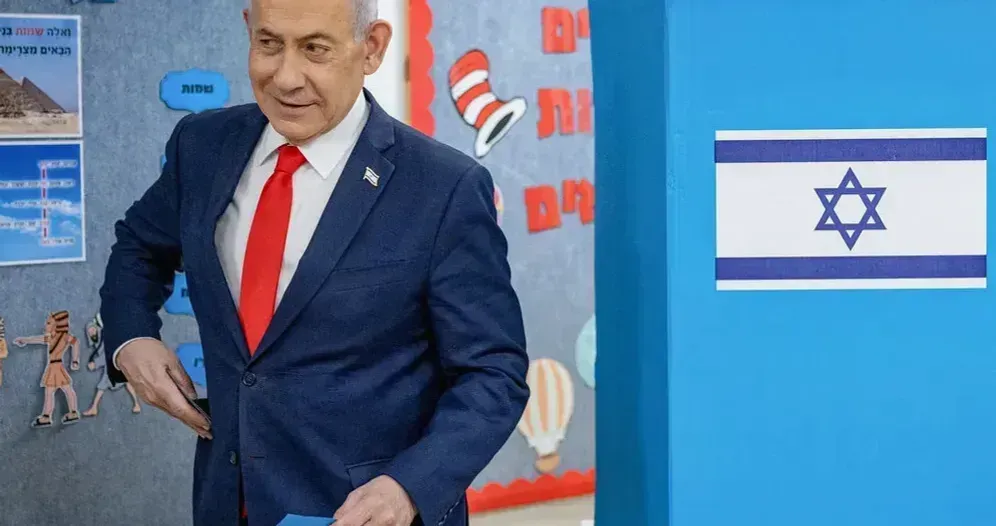
Israelis turned out in record numbers on Tuesday for an election widely regarded as the most pivotal moment in the country’s history. By late afternoon, nearly 67 percent of eligible voters had already cast their ballots, with a particularly surge in participation among Arab citizens. This high turnout sparked a volatile reaction from Prime Minister Benjamin Netanyahu, who used racially charged rhetoric to suggest that Arab voters were attempting to steal the election, a move seen by critics as a desperate attempt to galvanize his far-right base.
The stakes of the vote are profoundly high, marking the first national election since the devastating Hamas-led attacks on October 7 and the ensuing years of war. Voters are faced with two diametrically opposed visions for the state. Netanyahu is fighting to maintain his coalition of nationalists and ultra-Orthodox Jews, promising a more religious society and a firmer grip on Gaza and the West Bank. In contrast, a diverse opposition bloc led by former military chief Gadi Eisenkot is framing the vote as a final opportunity to save Israeli democracy and restore its standing on the global stage.
Eisenkot, whose own son was killed in the war in Gaza, has centered his campaign on accountability, calling for a reckoning over Netanyahu’s failure to prevent the October 7 catastrophe. While Netanyahu warns that the country faces annihilation without his leadership, Eisenkot and his allies pledge to curb extremist violence in the occupied territories and repair diplomatic ties that have frayed under current policies. The tension is further heightened by Netanyahu’s resistance to an independent commission investigating the security failures of three years ago.
Despite the record turnout, it is unlikely that a winner will be declared quickly. Israel’s parliamentary system requires parties to clear a specific percentage threshold to enter the Knesset, after which complex coalition negotiations often take weeks or even months. With opinion polls showing both sides roughly tied, the country may remain in a state of political limbo long after the polls close, leaving millions wondering if they have charted a new course or simply reinforced the status quo.