Author

admin

Browsing

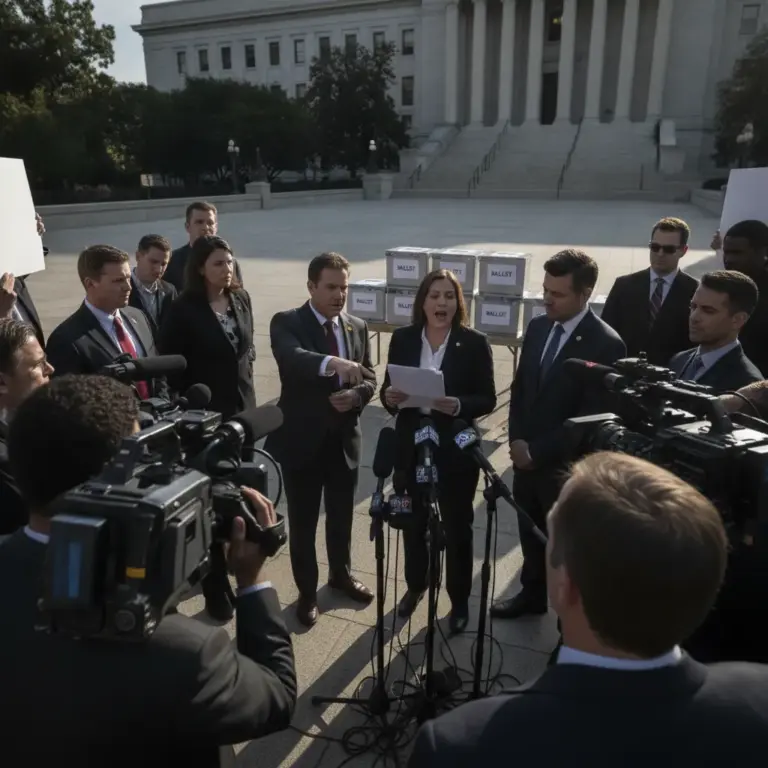
The Supreme Court swiftly dismissed an emergency request from the Trump administration on Monday, refusing to force California to isolate thousands of ballots that the Justice Department claimed may have been cast by noncitizens. In an unusually rapid response, the court issued a one sentence order denying the petition just hours after it was filed, offering no detailed reasoning or dissenting opinions. The move effectively ends a last minute attempt to interfere with the state’s ballot counting process on the eve of the midterm elections.

Solicitor General D John Sauer had argued that over 20,000 registered voters in California appeared to be noncitizens based on public records and sought what he called a modest remedy of setting these votes aside until their eligibility could be verified. However, this argument failed to gain traction in lower courts, including the 9th US Circuit Court of Appeals, which previously ruled that the federal government lacks the authority to dictate how states manage their own elections. That court suggested that any desired changes to mail in voting procedures should be addressed through Congress rather than the judiciary.

Legal experts pointed out that the timing of the appeal played a significant role in its rejection. Under a long standing legal guideline known as the Purcell principle, federal courts generally avoid altering election rules immediately before a vote to prevent chaos and confusion. With tens of millions of early ballots already cast across the country and many in California likely already processed, judges expressed concern that such an intervention would create a material risk of disenfranchising legitimate citizen voters.

While some members of the judiciary voiced concerns about protecting election integrity and enforcing laws against noncitizen voting, California officials and voting rights advocates maintained that the administration’s claims relied on shaky evidence. They argued that existing voter eligibility procedures were sufficient and that the Justice Department was overstepping its bounds. This latest defeat adds to a string of recent setbacks for the administration’s efforts to challenge state level election protocols via emergency appeals.


Squarespace is trimming nearly a fifth of its global staff as the company attempts to streamline its operations and pivot toward a more agile future. According to Jeff Seedman, a spokesperson for the firm, the restructuring involves cutting roughly 300 positions. The move is designed to simplify internal processes and sharpen corporate priorities as the web hosting giant prepares for what leadership describes as its next phase of growth.

This downsizing comes at a volatile time for the website construction industry, which has been fundamentally altered by the rise of generative artificial intelligence. A new wave of vibe coding tools now allows users to generate fully functional front end designs using simple text prompts, drastically reducing the manual effort once required to launch a site. Competitors have moved aggressively to capture this market, with Wix acquiring Base44 and newcomers like Lovable securing massive valuations from investors eager to capitalize on automated design.

In response to these pressures, Squarespace has doubled down on its own technical evolution. The company recently introduced an AI tool known as Blueprint and is currently building anticipation for Forma, an upcoming AI native platform that already has a growing waitlist of interested users. By integrating these capabilities, Squarespace hopes to remain competitive against both legacy rivals and nimble startups backed by venture capital.

The financial trajectory of the company has seen similar turbulence since it first entered the public eye. After going public in 2021 with a ten billion dollar valuation, Squarespace found it difficult to maintain momentum on the open market. This struggle eventually led to a decision to return to private ownership via a seven billion dollar private equity deal earlier this year, setting the stage for current structural changes meant to stabilize the business long term.

What was supposed to be a triumphant return for Lamar Jackson turned into a nightmare for the Baltimore Ravens on Sunday afternoon. After missing three weeks with an ankle sprain, the superstar quarterback stepped onto the field at Highmark Stadium only to see his day end on the very first offensive play. During his initial passing attempt, a defender struck Jackson’s hand during the follow-through, forcing him to leave the game and head straight to the locker room. Medical staff later confirmed a right thumb injury, ruling him out for the remainder of the contest.

Tyler Huntley was thrust back into action to lead an offense that has struggled significantly in Jackson’s absence. The transition proved rocky early on, as Huntley faced immediate pressure from a hungry Buffalo defense. A costly sack resulted in a fumble recovered by the Bills, further stalling any momentum Baltimore hoped to build against their high-flying opponents. Despite the chaos under center, Derrick Henry provided a brief glimmer of hope by punching in a short touchdown run to keep the Ravens within striking distance.

Meanwhile, Josh Allen continued his dominant campaign, leading the Bills to an early advantage behind both his arm and legs. Allen found success early with a leaping fourth-down touchdown run that put Buffalo ahead 7-0. The lead grew following one of the strangest plays of the game when kicker Tyler Bass launched a field goal that spiraled wildly on its side, struck the goalpost, and somehow ricocheted through the uprights to give Buffalo a 10-0 cushion.

The defensive battle remained tense throughout the opening stretches, with Baltimore showing resilience near their own goal line by stuffing several consecutive runs inside the five-yard line. However, without their franchise centerpiece and facing a rested Bills team coming off a bye week, the Ravens find themselves fighting an uphill battle in New York while worrying about how long Jackson will now be sidelined again.

President Isaac Herzog is calling for a shift in tone among Israel’s political elite as the country grapples with an inconclusive election result. With neither Prime Minister Benjamin Netanyahu nor his chief rival, Gadi Eisenkot, securing a clear majority in the 120-seat Knesset, the nation finds itself in a precarious legislative limbo. In a plea for stability, Herzog urged party leaders to approach upcoming negotiations with an open heart and mind, stressing that it is time to move past campaign rhetoric and face the factual reality of the voting outcomes to avoid yet another round of elections.

The arithmetic of the latest vote places an unusual amount of leverage in the hands of parties representing Israel’s minority Arab community, whose parliamentary presence nearly doubled to 19 seats. While Mr. Netanyahu has remained steadfast in his refusal to collaborate with these groups—even alleging unfounded claims of foreign interference in the electoral process—Mr. Eisenkot has signaled a cautious willingness to negotiate. He has proposed four baseline conditions regarding Israeli sovereignty and the designation of Hamas as a terrorist organization, suggesting that any representative willing to sign onto those principles could be a partner in government.

Despite this opening, significant hurdles remain that make a breakthrough feel distant. Within Mr. Eisenkot’s own diverse coalition, figures like Avigdor Lieberman continue to oppose cooperation with Arab parties, creating internal friction that mirrors the national divide. Meanwhile, analysts suggest that Eisenkot’s demands may be too steep for Arab leaders to accept without compromising their core identities, leading some observers to believe that a total deadlock is more likely than a functioning coalition.

As President Herzog begins formal consultations this Wednesday to determine who gets the first opportunity to form a government, the atmosphere remains tense. For now, Mr. Netanyahu continues to serve as caretaker prime minister while doubling down on his ideological objections to his opponents. Whether pragmatic necessity eventually overrides deep seated animosity remains the central question for an Israeli public weary of political instability and repeated trips back to the polling stations.

The golden age of the political conspiracy thriller arrived during the shaky foundations of the 1970s, a decade defined by Watergate and a sudden, sharp decline in public trust toward government institutions. Films from that era captured a specific kind of atmospheric dread, where an ordinary citizen would stumble upon a hidden truth only to find themselves hunted by an invisible, omnipotent power. These stories were less about the specifics of a plot and more about the crushing weight of systemic corruption and the feeling that the people in charge were operating on a different set of rules than everyone else.

Fast forward to today, and the landscape of suspicion has shifted dramatically. While seventies cinema focused on secret cabals hiding information from the masses, we now live in an era where misinformation is broadcast openly across social media feeds and echoed by high ranking officials. The mystery is no longer about uncovering a hidden document in a dark basement but rather navigating a digital wilderness where contradictory truths coexist side by side. We have moved from an age of institutional secrecy to an age of strategic noise.

Looking back at these vintage thrillers offers more than just nostalgia; it provides a mirror for our own anxieties. By analyzing how past generations processed their distrust through art, we can better understand why modern conspiracy theories gain such powerful traction. Those old movies taught us how paranoia feels when it becomes a cultural baseline, reminding us that while the medium of delivery has changed from celluloid to algorithms, the underlying fear of being manipulated remains constant.

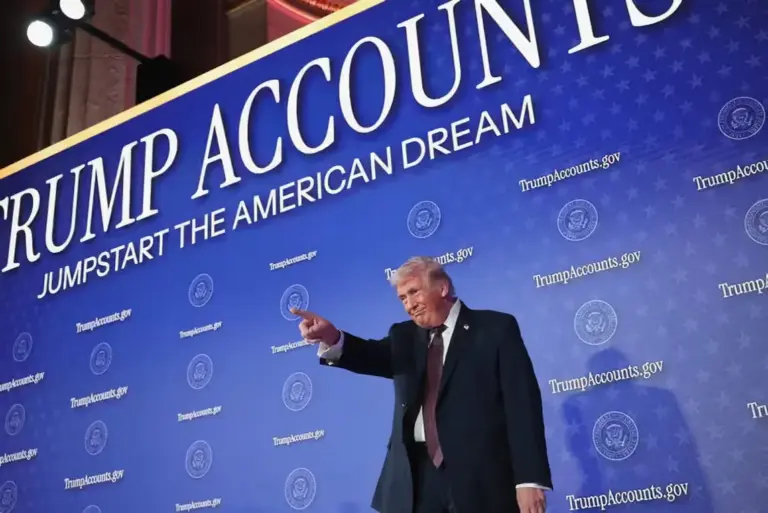
Quanisha Green first suspected something was wrong when she opened an email from the IRS urging her to claim a Trump Account for her two children. As a business advisor and college department director in Philadelphia, Green is used to navigating bureaucracy, but the discovery that nearly 70 million accounts had been automatically created for minors across the country left her unsettled. The initiative, launched following an announcement by President Donald Trump, establishes a new type of individual retirement account for every single child under 18 with a valid Social Security number, effectively bypassing parental consent entirely.

While the government frames the move as a way to ensure children gain an early stake in the American economy, many parents view it as an overreach of federal power. For mothers like Kate Pospisil in Texas, the issue transcends political affiliation. She expressed horror that a government agency could open a financial account involving private banks and brokerage firms in her five year old daughter’s name without any signature or opt out option. Pospisil argued that such decisions should belong solely to parents, noting her deep concern regarding how much sensitive personal data was shared with private entities during the rollout.

The logistics of the program vary depending on a child’s age, with those born between early 2025 and late 2028 eligible for a one time thousand dollar government deposit upon request. However, older children are also enrolled automatically despite being ineligible for the seed money. Even if parents refuse to download the required app or activate the accounts, the profiles remain active in the system, allowing outside donors to make contributions. Adding to the frustration is confirmation from Treasury officials that once an account is claimed, it currently cannot be closed.

Beyond the philosophical debate over parental rights, security concerns have taken center stage for critics like Green. Her hesitation stems from a general lack of confidence in current administrative safeguards, specifically citing previous controversies involving attempts by figures like Elon Musk to access sensitive IRS databases. While proponents suggest that separating politics from finance reveals a beneficial tool for long term wealth building, many families find themselves trapped in a system where their children’s identities are linked to a branded government project they never asked for and cannot escape.

Saul Canelo Alvarez proved that age is just a number on Saturday night at the Kingdom Arena in Riyadh, delivering a tactical masterclass to reclaim the WBC super middleweight world title. Facing the previously unbeaten Christian Mbilli, the Mexican superstar looked like a man possessed by his younger self, utilizing superior ring generalship and precision punching to secure a convincing unanimous decision victory with scores of 115-112, 116-111, and 117-110.

Coming off a difficult stretch that saw him lose his belts to Terence Crawford thirteen months ago, Alvarez entered the ring with something to prove. While Mbilli attempted to utilize high pressure early on, he quickly found himself trapped in an educational session led by Canelo. The veteran champion dismantled Mbilli’s offense with effortless movement and devastating counters, including a brilliant right-hand uppercut in the sixth round that left the challenger visibly shaken.

As the fight progressed into the championship rounds, the gap in experience became glaringly apparent. Mbilli struggled to find any meaningful rhythm, often fighting at a distance that played directly into Canelo’s strengths. Despite a moment where Mbilli lost a point for hitting the back of Alvarez’s head, there was little doubt who controlled the tempo. Canelo displayed a level of activity and punch volume rarely seen in recent years, consistently beating Mbilli to the punch while making him miss with ease.

By the twelfth round, it was clear that Mbilli needed a miracle knockout to overcome the deficit on the scorecards. Instead, he spent the closing minutes absorbing stiff jabs and punishing body shots from an energized Alvarez. With this victory, Canelo not only restores his status as a world champion but sends a definitive message to the division that he remains its most formidable force despite previous setbacks.

London streets became a flashpoint for civil liberties on Saturday as police arrested 139 people during a large scale demonstration against the government’s banning of Palestine Action. Hundreds of protesters gathered outside the United States embassy, ignoring official warnings to stay away from the rally. According to the Metropolitan Police, most of those taken into custody were detained for expressing support for the organization, which has been officially designated as a terrorist entity under UK law since last July. Similar scenes played out in Edinburgh, where crowds assembled outside the US consulate, though no arrests were reported in the Scottish capital.

The wave of detentions has sparked immediate political backlash and accusations of state overreach. Labour MP John McDonnell criticized the police tactics on social media, arguing that simply protesting a legal ban should not be automatically equated with membership in a prohibited group or constitute an arrestable offense. He joined other critics who believe the government made a grave error in classifying Palestine Action alongside groups like al-Qaeda and ISIS, suggesting instead that the move is part of a broader effort to stifle dissent regarding Palestinian rights.

Organizers behind the events, including Defend Our Juries, described the current climate as dystopian, claiming that thousands have been swept up under counter terrorism legislation for participating in peaceful vigils. A spokesperson for the group suggested that the proscription was designed to appease international allies and protect arms manufacturers rather than address any genuine security threat. This sentiment was echoed by Amnesty International UK, which condemned the sight of diverse age groups being hauled into police vans as a disgraceful assault on basic freedom of speech.

These confrontations come at a critical moment as all eyes turn toward the Supreme Court this coming Wednesday. An appeal will be heard challenging the legality of the proscription itself, potentially deciding whether Palestine Action can operate legally within Britain once again. Until then, activists warn that they will continue to challenge what they view as an unlawful crackdown on their right to assemble and express opposition to genocide.

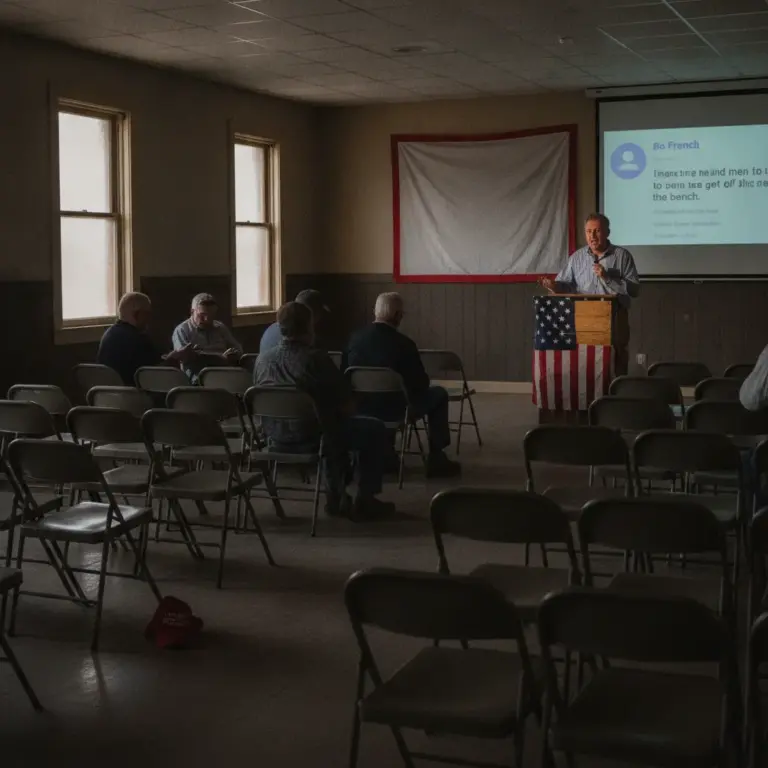
Panic is beginning to set in across various levels of the Republican party as leaders realize their base may simply stay home this November. From Georgia to Texas, candidates are sounding the alarm about a growing complacency among rural voters and a visible lack of urgency compared to their opponents. In Texas, candidate Bo French has gone as far as calling out men in lagging counties via social media, urging them to get off the bench because the other side is already showing up. This internal anxiety is backed by data suggesting a widening enthusiasm gap, with recent polling indicating that Democratic leaners are significantly more motivated to hit the polls than they were four years ago, while Republican energy has remained stagnant.

Party insiders admit that motivating their supporters is currently a steeper hill to climb than the Democrats’ strategy. One Republican National Committee official noted that while opposing the current administration is simple messaging, selling specific accomplishments amidst economic instability and high gas prices is far more complex. There is a sense that voters are experiencing a general political fatigue, exhausted by constant ads and texting campaigns. Local officials in swing states like North Carolina describe a public that is essentially throwing up their hands, creating a precarious environment where an uninformed or disengaged voter becomes a liability for the ticket.

The struggle highlights a fundamental challenge for the GOP: trying to maintain the massive coalition Donald Trump built without having him personally on the ballot. While Republicans possess a formidable financial advantage and favorable redistricting maps, these structural wins cannot replace actual bodies at the voting booth. Early voting data from Kansas and North Carolina suggests Democrats are successfully recruiting infrequent voters who typically skip midterms—the very same demographic that helped propel Trump to victory in previous cycles.

To counter this trend, organizations like Turning Point USA have launched aggressive ballot chasing operations designed to hunt down irregular voters who might otherwise forget to participate. It is a shift in strategy for a party that previously took its base’s excitement for granted during the Trump era. As deadlines approach, GOP strategists acknowledge they are playing catch up with Democratic mobilization tactics, concluding that their primary mission now is simply to bother their own supporters relentlessly until they actually cast their ballots.

Binance is nearing the end of a grueling recovery process following a staggering security breach that saw 6.3 billion dollars in cryptocurrency stripped from its user base. The company’s chief executive announced that roughly 90 percent of those lost assets have already been replenished, marking a significant step toward making victims whole after one of the largest heists in digital asset history.

While the vast majority of the funds have been restored, a final slice of the losses remains outstanding. According to leadership, the remaining 10 percent consists primarily of less liquid tokens that are more difficult to source on the open market. Despite this hurdle, the exchange has pledged to cover every cent of the financial impact, ensuring that no customer is left bearing the cost of the attack.

Attention is now shifting toward restoring normal operations for millions of traders who have been locked out of their accounts. In a recent update shared on X, Binance confirmed that it is currently working to resume withdrawal services. If everything stays on schedule, users should regain full access to move their funds starting this coming Sunday.

Throughout the crisis, the firm has emphasized its dedication to transparency and accountability. By absorbing the loss directly rather than passing it onto stakeholders or insurance providers, Binance hopes to rebuild trust with a community shaken by such a massive vulnerability. Further updates are expected once withdrawal systems officially go back online.